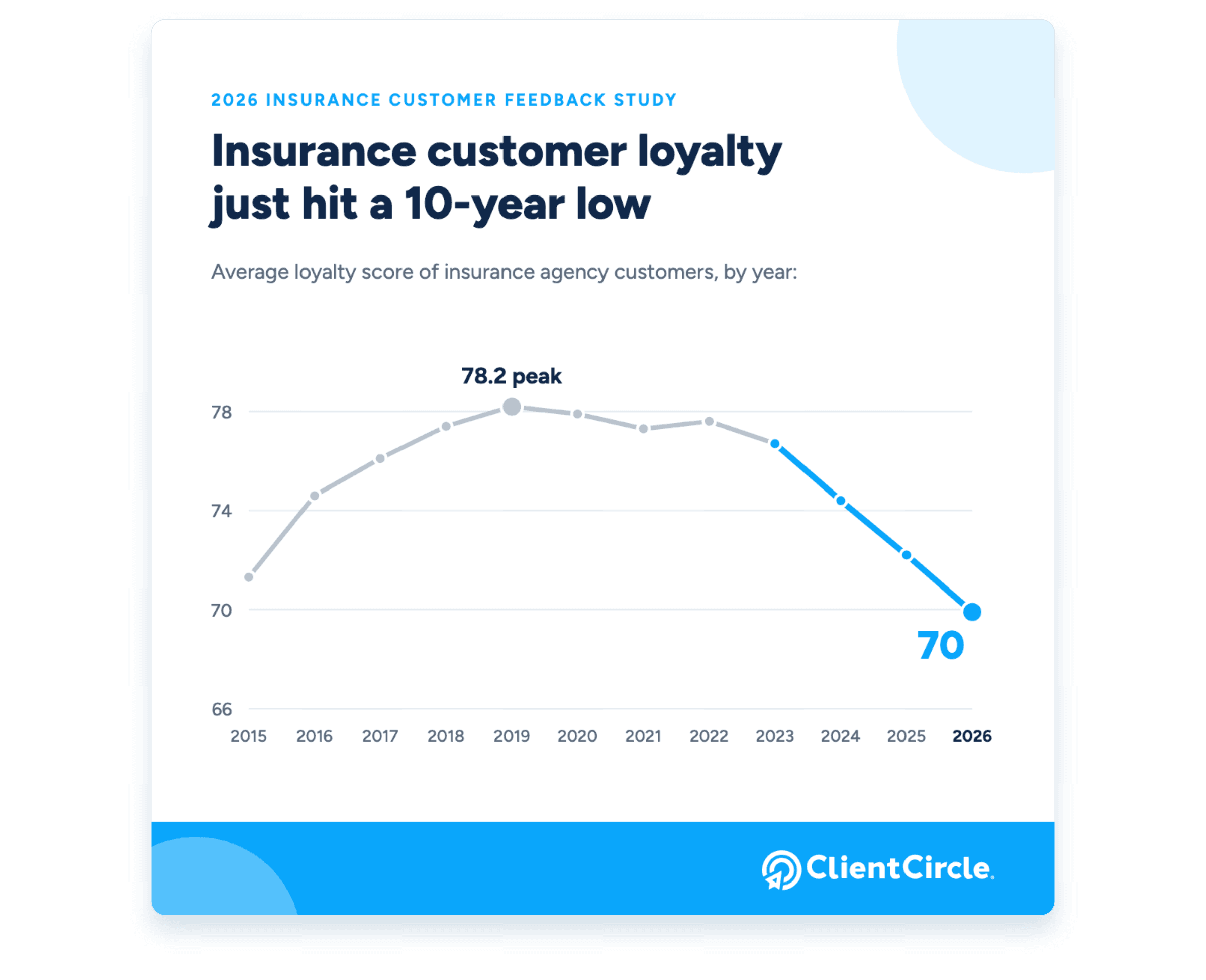
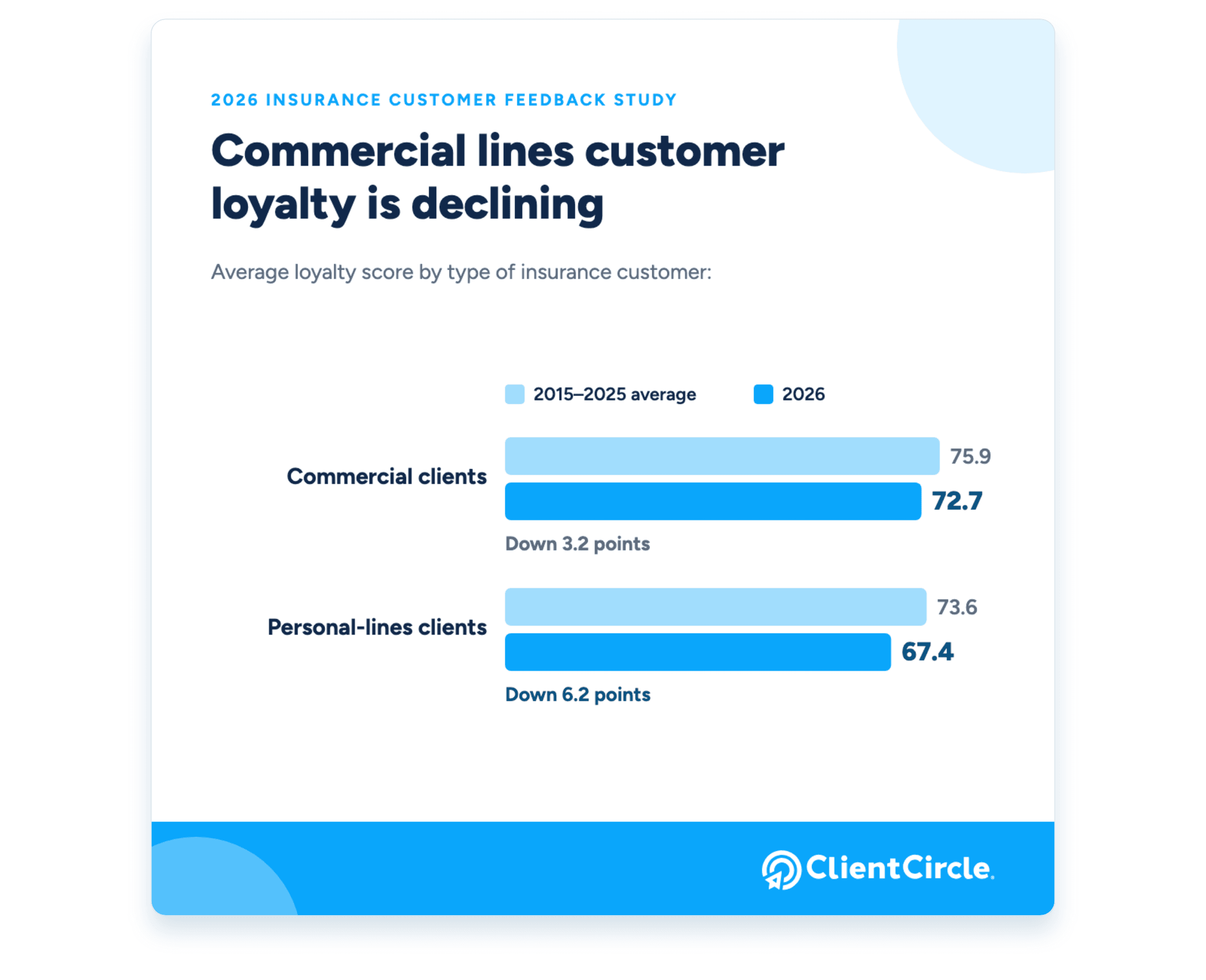
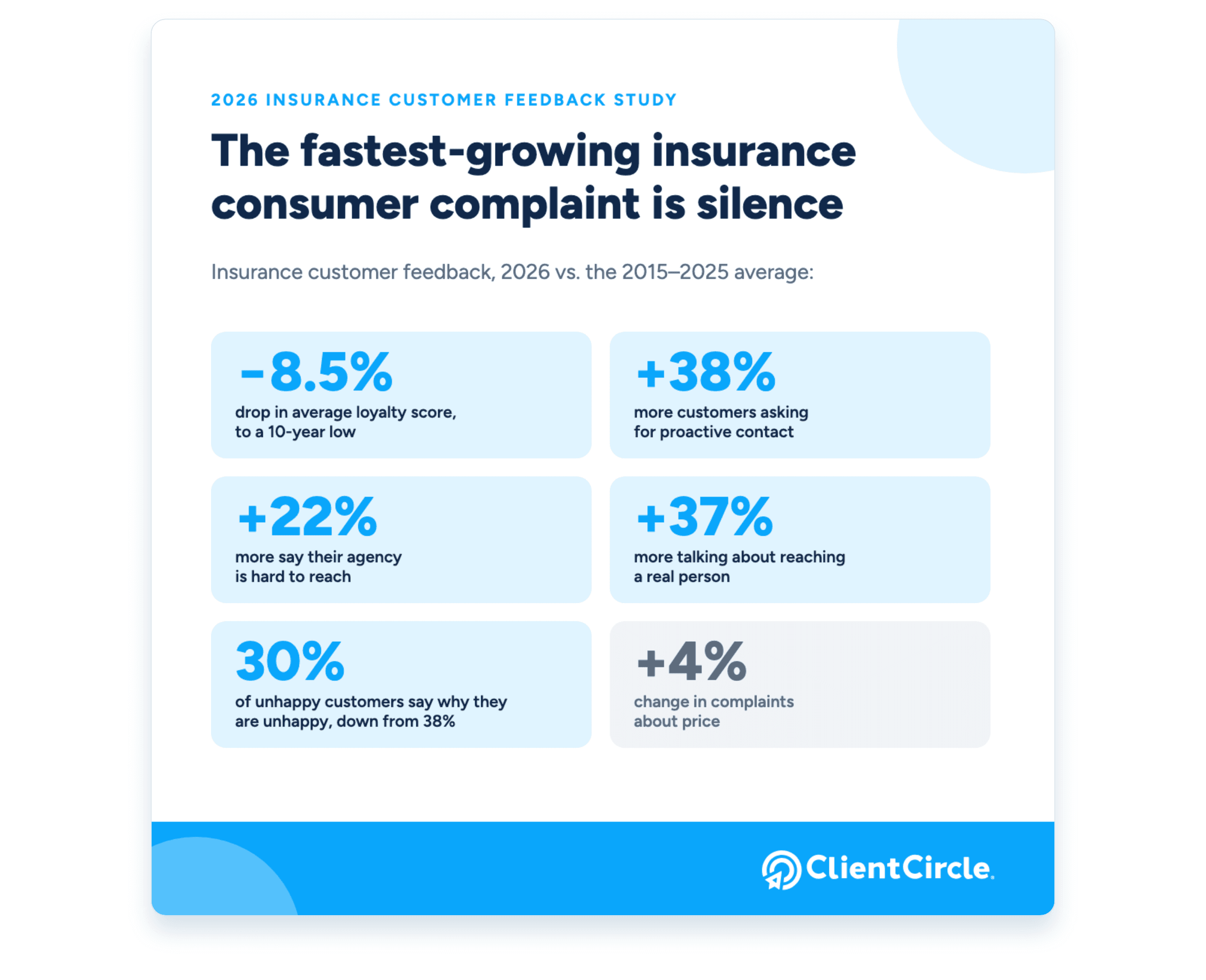
- Sentiment hit a 10-year low. The average loyalty score fell to 70 in 2026, down 8.5% from the 2015–2025 average.
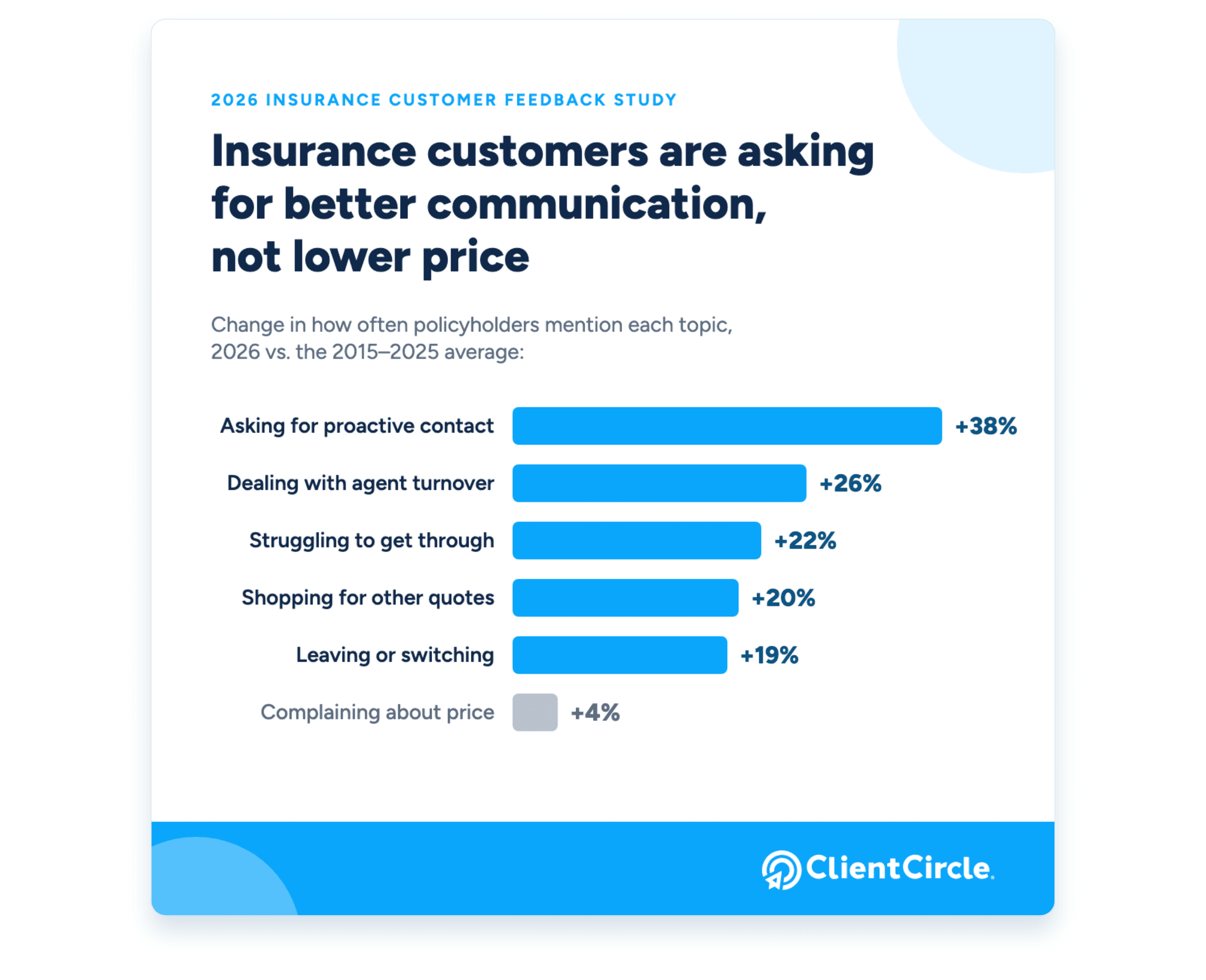
- The fastest-growing complaint is silence. Requests for proactive contact are up 38% against the 2015–2025 average. Complaints about agent turnover are up 26%, and about being hard to reach, 22%. Price mentions are up just 4%.
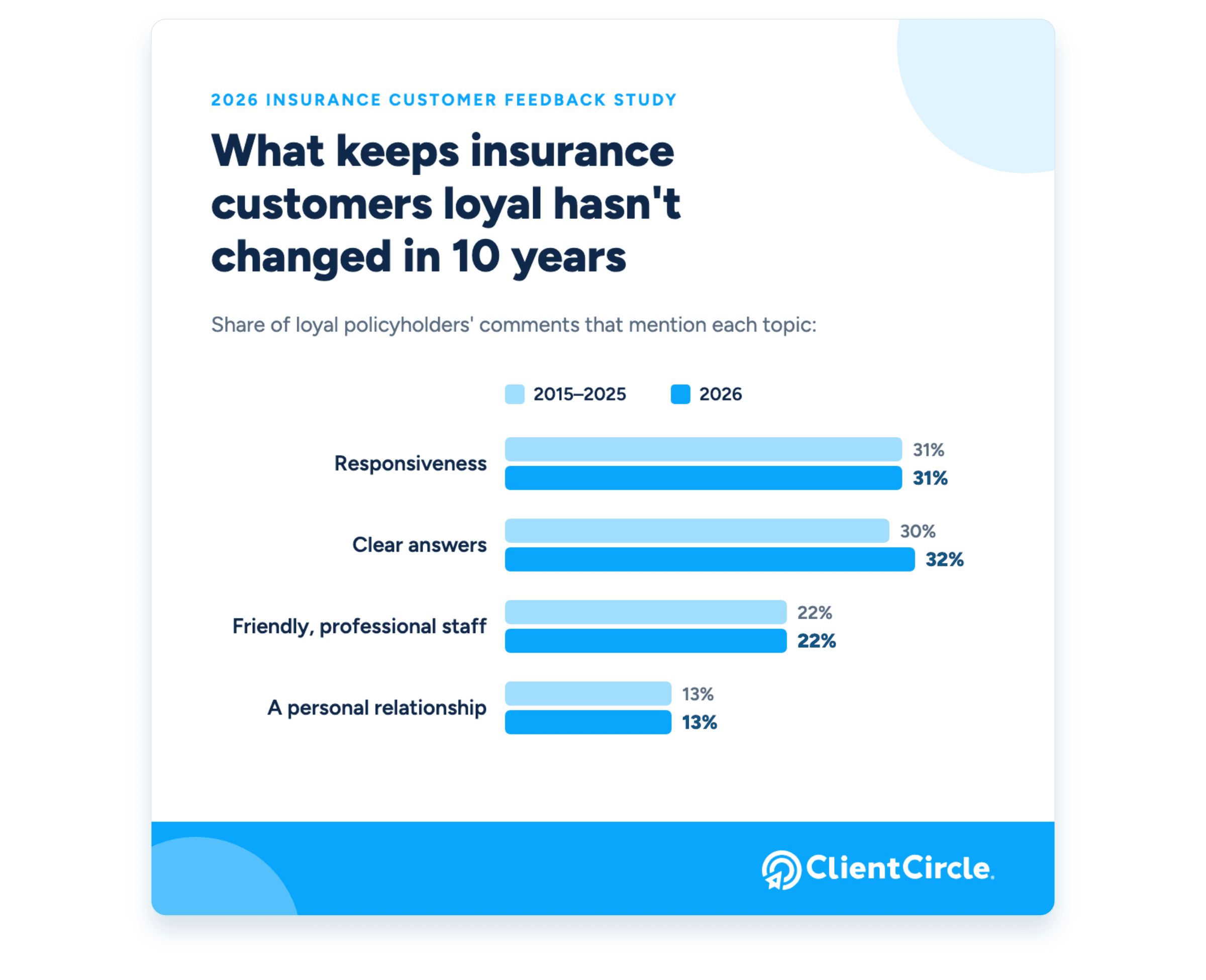
- What earns loyalty hasn't changed. For a decade, promoters have praised the same things: responsiveness, clear answers, friendly staff and a named person who knows them.
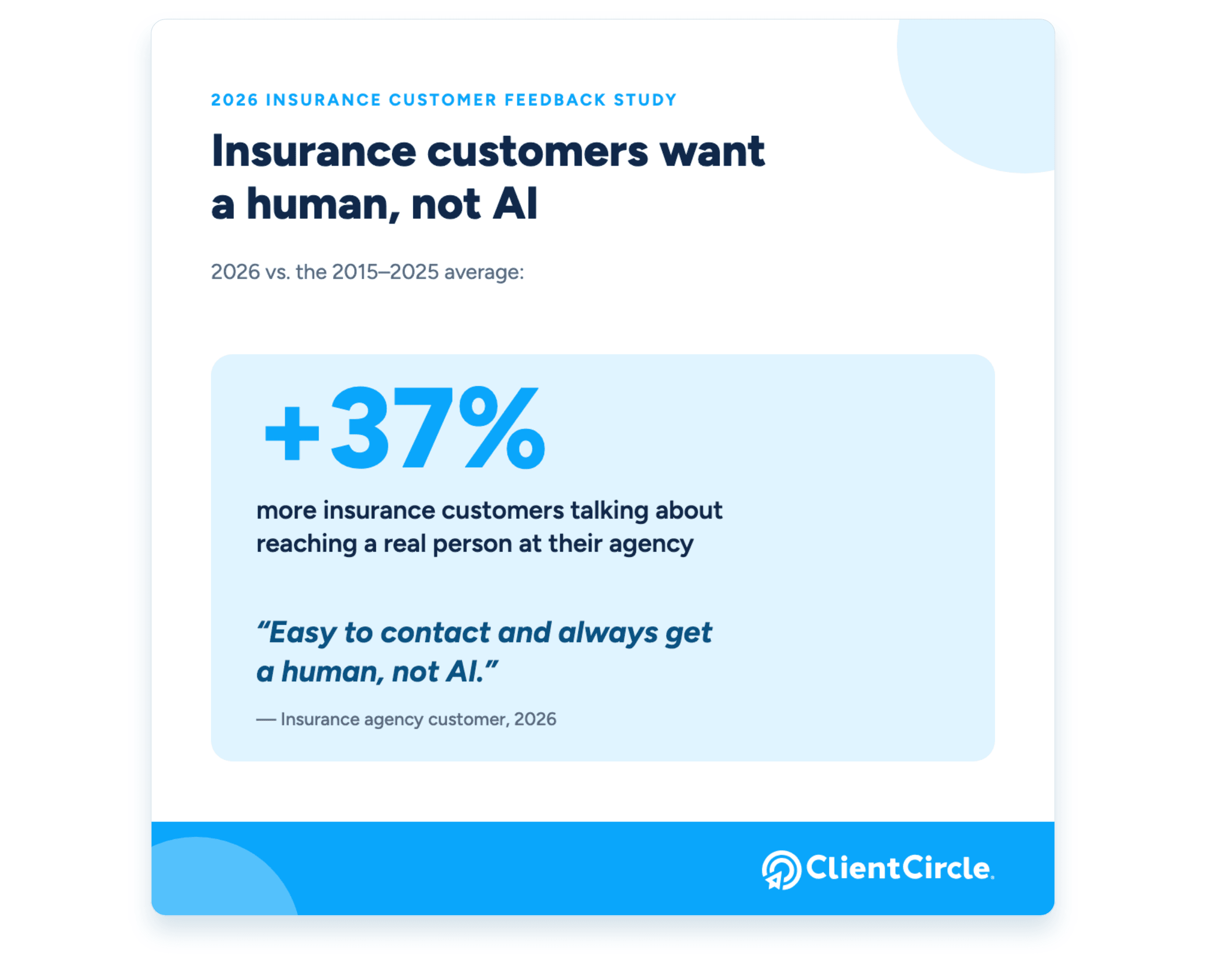
- Customers now say "human" out loud. Comments about reaching a real person rose 37%, mostly as praise: "Easy to contact and always get a human, not AI."
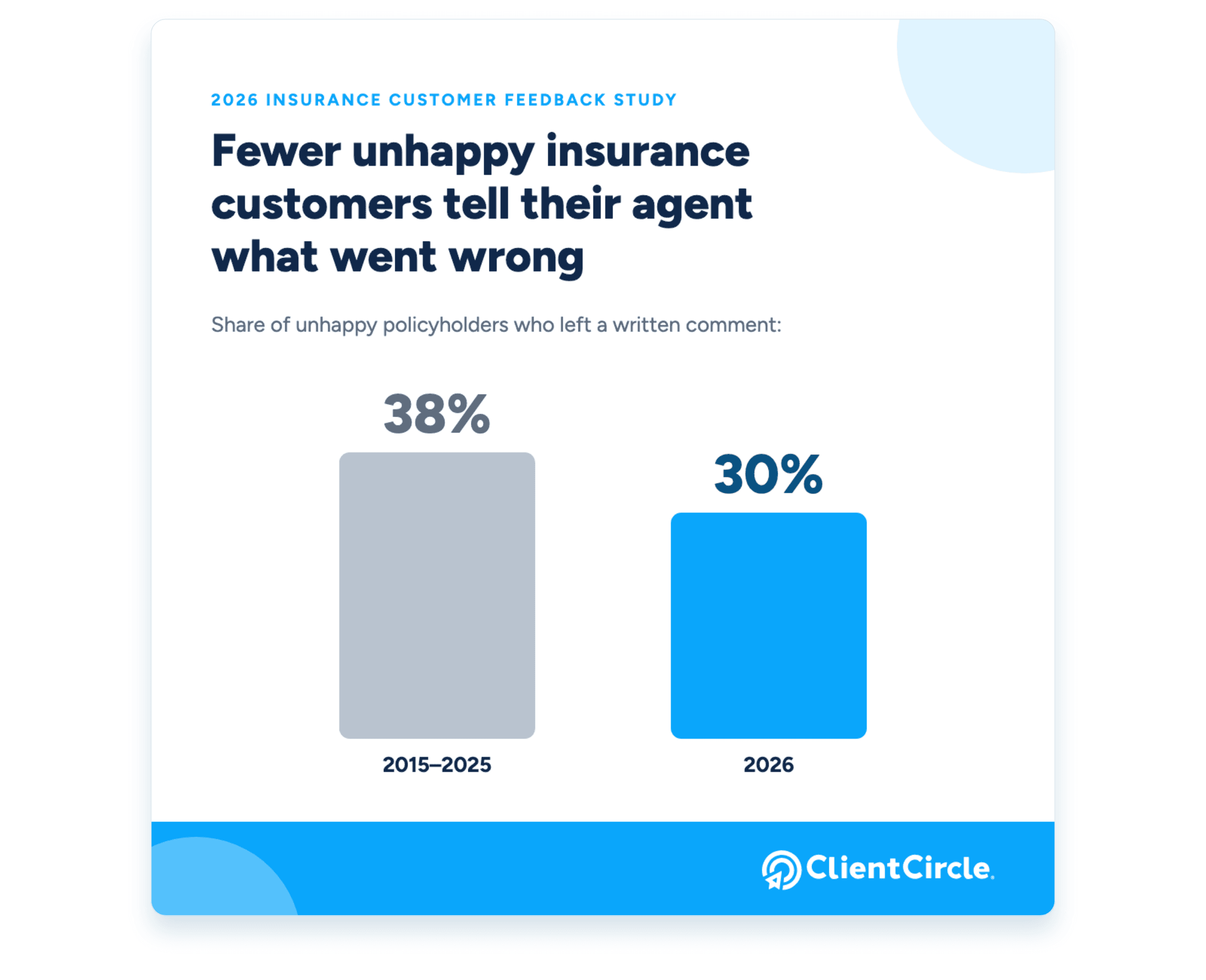
- More unhappy customers go quiet. Only 30% of detractors explain their score now, down from 38% over 2015–2025.
The takeaway for agencies: in the age of AI, human connection is king.
What agencies can do about it
The good news: every complaint that's growing is within your agency's control, even when rates aren't. Fixing them takes showing up consistently, for every client, all year long, and the right automation makes that possible at an agency of any size.
Stay in touch all year, not just at renewal
Requests for proactive contact are up 38%. As one customer put it: "Once you get me signed up, I never hear from you again."
What to do: Give every client a reason to hear from you when nothing is wrong.
How to do it: Use automated touchpoints to stay in contact through the year: welcome cards for new clients, handwritten thank-you cards after a purchase or a referral, letters on rates changes, birthday and holiday cards at the right times of the year. Between renewals, send short, helpful content, like seasonal safety tips or coverage reminders, so clients hear from you with something useful, not just a bill. Set it up once, and every client hears from you several times a year without anyone having to remember.
Review coverage before renewal, not after the bill arrives
Customers keep asking for the same thing: "Review my policies before they are set to renew and let me know if there is anything I can do."
Price comes up in about 1 in 3 comments from unhappy customers, and often the frustration is the surprise, not the number: "Let the customers know of any increases in advance and reason of the increase."
What to do: Reach out 30–60 days before every renewal with a quick coverage review and, if rates are going up, a heads-up that explains why.
How to do it: Use renewal campaigns and account review reminders tied to the renewal dates in your agency management system, so every client gets outreach on time, not just the ones your team happens to think of. When premiums rise, send a short, plain-language note on what's driving rates in your area and offer to shop the policy or adjust coverage. Clients take an increase far better from their agent than from a bill.
Ask how you're doing, regularly
The loyalty score is at a 10-year low, and fewer unhappy customers are telling agencies why.
What to do: Ask for feedback consistently, and watch the trend, not just the latest score.
How to do it: Send automated feedback surveys on a regular schedule, and track your loyalty score and retention side by side on a dashboard, by office and by team member, so you spot a slip months before it costs you clients.
Pick up the phone when there's a problem
Only 3 in 10 unhappy customers now explain their score. The rest go quiet, and the only way to find out what went wrong is to ask.
What to do: Follow up personally on every low score, within days.
How to do it: Set up alerts for low scores with automatic call reminders, so the right person picks up the phone while there's still time to fix things.
Be reachable where clients already are
"Hard to reach" complaints are up 22%, while loyal clients praise agents who get back to them fast: "Anytime I contacted her, she returned my call or text."
What to do: Give clients more than one way to reach you, so a quick question doesn't turn into phone tag.
How to do it: Let clients text your agency and chat with you on your website, with every conversation in one shared inbox your whole team can answer from. A two-line text often solves what a voicemail never would.
Make sure no client falls through the cracks
Complaints about agent turnover and agency mergers are up 26%, and "hard to reach" is up 22%. "My agent left and I never heard anything about renewal."
What to do: Make sure client relationships live with the agency, not in one person's inbox or voicemail.
How to do it: Use pipelines that move every new quote and every service request through clear stages, with every email, text and call logged where the whole team can see it. Anyone can see what was promised, what's overdue and who's waiting, and pick up where a colleague left off. Campaigns tied to your client data keep cards, surveys and renewal outreach going when someone is out or leaves. When a book changes hands, send every affected client a personal introduction to their new contact.
Hold an annual review with every client
Customers ask for it: "It would be a good idea to have a personal annual review of current services being provided and assess any needs for future services."
And the ones who get it notice: "Our agent does annual reviews and finds ways to offer savings. We feel he is looking out for us."
What to do: Schedule a once-a-year conversation with every client, by phone, video or in person, to walk through their coverage and what's changed in their life or business.
How to do it: Use X-dates to set up an automatic communication to encourage clients to book the conversation, and send a short questionnaire beforehand to learn what's changed: a new home, a teen driver, a growing business. The annual review is also where cross-selling feels natural instead of pushy. When you learn a client bought a boat or hired employees, you can offer the coverage they now need and close gaps before they turn into surprises at claim time.
Turn loyal clients into reviews and referrals
Eight in 10 policyholders are promoters, and many say in their feedback that they already recommend their agency to friends and family.
What to do: Ask happy clients for a review or a referral right after they give you a high score, while the good feeling is fresh.
How to do it: Automate review requests and referral invitations to go out after a high loyalty score. Across ClientCircle agencies, review request emails are opened 74% of the time.
Automate the busywork, not the relationship
The customers who love their agency describe a person: "Easy to contact and always get a human, not AI."
What to do: Let technology handle the reminders, the paperwork and the prep work, and give your team its time back for conversations.
How to do it: Automate the cards, surveys, reminders and campaigns, and use AI behind the scenes to draft messages when appropriate, flag clients who may be at risk and spot cross-sell opportunities. Then let your people do what no software can: answer the phone, remember the client, and be there when it matters.
Be their advocate when a claim happens
A claim is the moment a policyholder finds out whether their agent matters. Claims come up in about 7% of comments from unhappy customers, compared with about 4% from loyal ones, and the loyal ones often name the person who stepped in: "Talking to a live person makes all the difference in the world! She went above and beyond trying to help us get things straightened out with our claim."
What to do: Check in personally when a client files a claim, keep them updated while it's open, and follow up once it's closed.
How to do it: Set up an automated claim follow-up that reminds the right team member to call at each stage, and sends a personal note or card once the claim is settled. It's the one moment no chatbot can handle, and the one clients remember longest.