Ten postcards insurance agents can send to stay top of mind
March 11, 2026 by ClientCircle
Share this:
Insurance marketing works best when you use multiple ways to connect with clients and prospects. Email, text messages, phone calls, letters and even handwritten cards all play an important role in keeping relationships strong and communication consistent.
Each channel serves a different purpose. Some are great for quick updates, others work better for personal touches or important reminders.
Postcards offer another valuable way to reach people—one that can stand out in a digital-heavy world.
Because they’re physical, postcards often get noticed in a way electronic messages sometimes don’t. A well-timed postcard can grab attention, reinforce your brand, create a memorable touchpoint with clients and prospects and even help you sell a policy or two.
For insurance agents looking to stay visible and build stronger relationships, postcards can be a simple but powerful addition to their marketing strategy.
So what kinds of postcards should insurance agents send?
Here are ten ideas that work.
1. General insurance topics
Postcards can also highlight types of insurance people may not realize exist or may not have considered before. These educational messages introduce coverage options without referencing anyone’s specific policy.
Examples include:
Travel insurance for upcoming trips
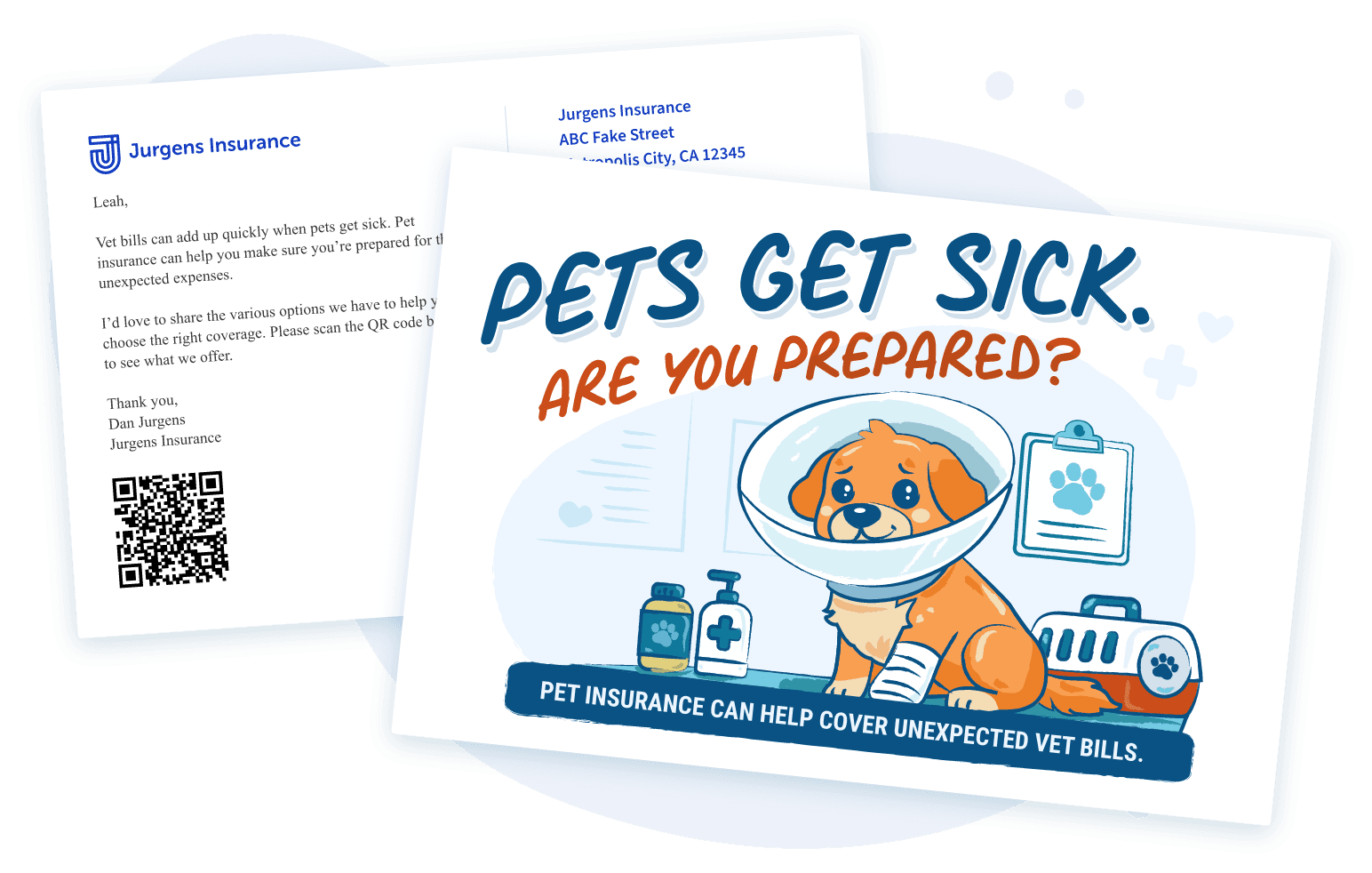
Pet insurance for unexpected veterinary costs
Identity theft protection
Here’s what to say:
[Name], Did you know travel insurance can help cover unexpected cancellations, delays and other emergencies during a trip? If you’re planning travel this year, we’re happy to explain your options. Give us a call, we’d love to connect. [Include contact information]
Sharing information like this helps position the agent as a knowledgeable resource while introducing coverage options clients and prospects may want to explore.
An example of a card promoting pet insurance.
2. Introducing your agency to prospects
Postcards are a simple way to introduce yourself to people in your community.
Instead of leading with a heavy sales pitch, the goal is simply to let people know there’s a local insurance professional nearby who can help when they need it.
Here’s what to say:
[Name], I’m Sarah with Jurgens Insurance. I’m proud to serve families and businesses here in Des Moines, Iowa. If you ever have questions about insurance or coverage options, my team is always happy to help. [Include contact information]
Why it works:
Builds local familiarity
Keeps the message simple and approachable
Creates awareness before someone needs insurance
3. Medicare annual enrollment reminders
For agents who offer Medicare plans, reminders about the annual enrollment period can be incredibly helpful. A postcard can highlight the upcoming deadline and encourage people to review their options before time runs out.
Because the message is general and educational, it works perfectly for a postcard format.
Here’s what to say:
[Name], Medicare Annual Enrollment is October 15 through December 7. If you’d like help reviewing your options for the coming year, our team is here to answer questions and walk you through your choices. [Include contact information]
4. Community event invitations
Hosting a client appreciation event or participating in a local community gathering? Postcards are a great way to spread the word.
Examples include:
Client appreciation events
Charity fundraisers
Educational workshops
Community open houses
A postcard invitation feels personal and can help boost attendance. Here’s what to say:
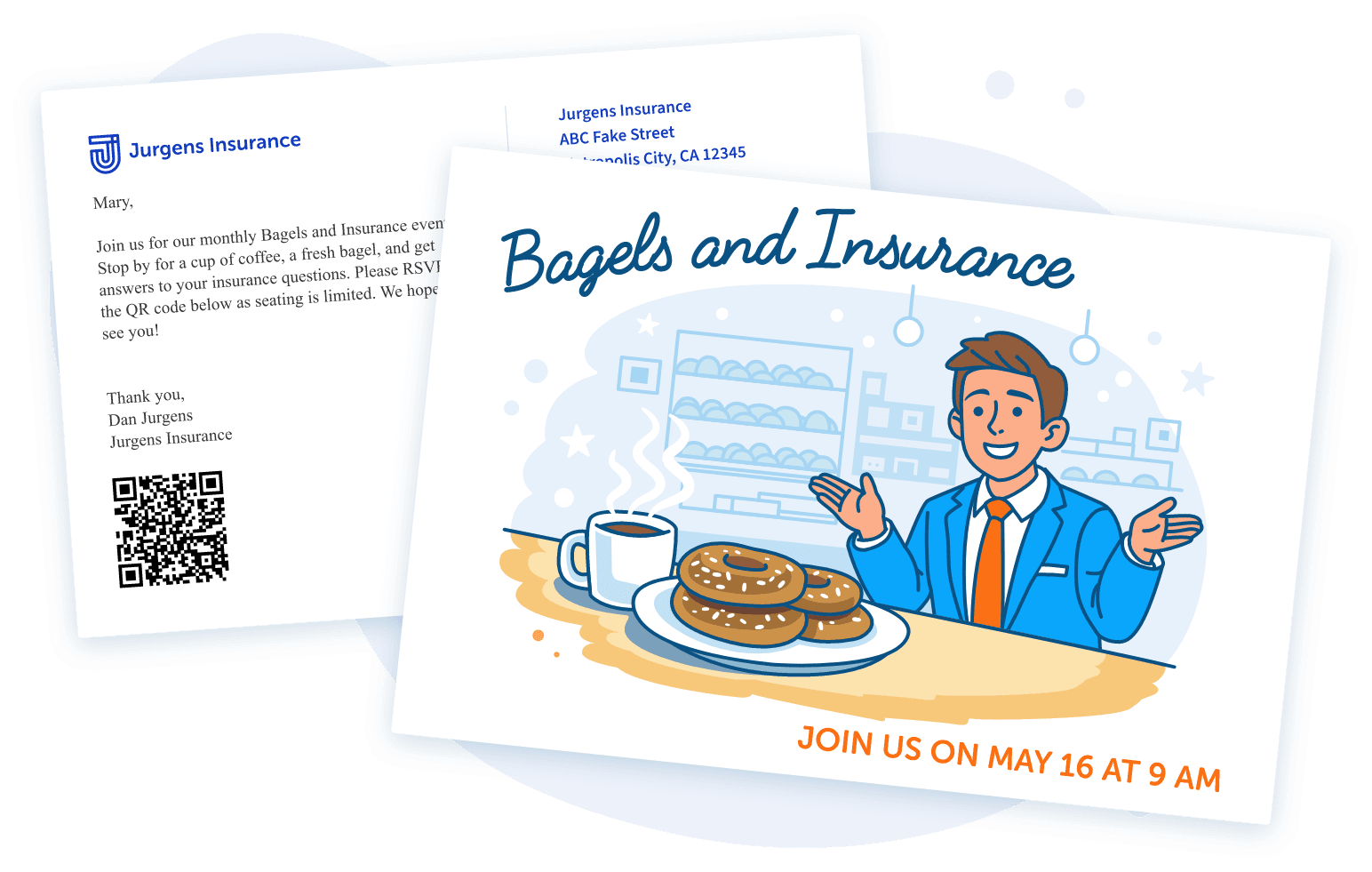
[Name}, Join us for our annual client appreciation BBQ on June 10 at Riverside Park. Stop by for food, giveaways and a chance to meet the team. Kids are welcome. We’d love to see you there! [Include a QR code to more details]
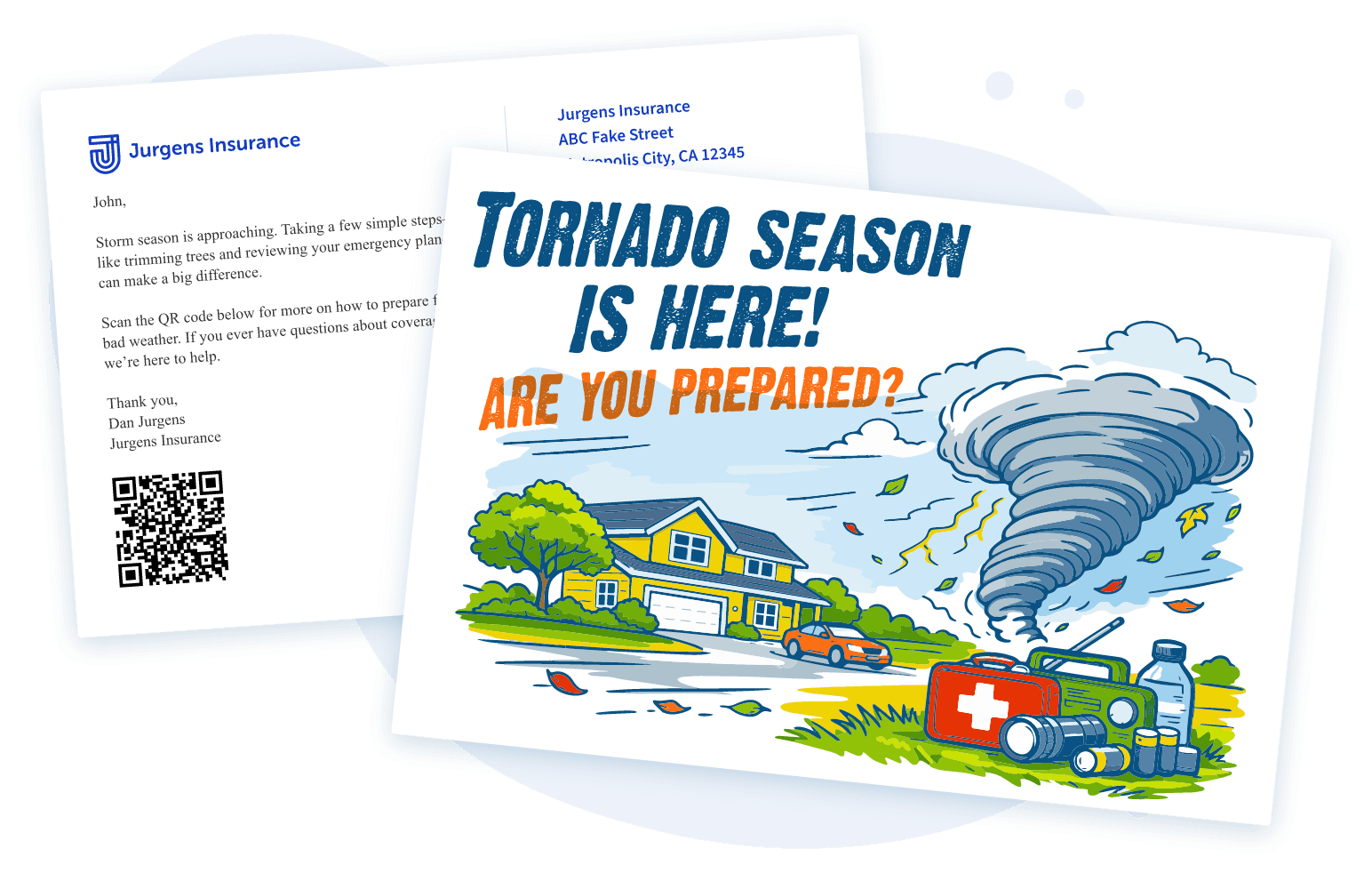
An example of a card promoting the importance of being prepared for weather events.
5. Agency announcements
Postcards work well for sharing agency updates that clients and prospects may want to know.
Examples include:
Moving to a new office location
Expanding the team
Opening a second office
Celebrating an agency milestone
These messages reinforce that your agency is active and growing.
Here’s what to say:
[Name], We’re excited to share that Jurgens Insurance has moved to a new office at 245 Main Street. Stop by anytime or give us a call if we can help with your insurance needs. We are open Monday-Friday 8 a.m. – 5 p.m. [Include contact information]
6. Coverage awareness messages
Many people don’t realize certain risks require separate coverage. Postcards can highlight important topics such as:
Flood insurance awareness
Umbrella liability protection
Life insurance planning
Renters insurance for tenants
These messages are a great way to start conversations on specific types of coverage.
Here’s what to say:
[Name], Did you know most homeowners policies don’t cover flood damage? Flood insurance can help protect your home and belongings. Contact our office if you’d like to learn more. We’d love to review your policy for you and help make sure you’re protected. [Include contact information]
7. Weather and disaster preparedness
Insurance agents often serve as trusted advisors during major weather events. Postcards can share preparedness tips ahead of common seasonal risks such as:
Hurricane season
Wildfire preparedness
Tornado safety
Winter storm readiness
These reminders demonstrate care for the community while reinforcing the agent’s expertise. You can always include a QR code to link clients and prospects to more information on your website, too.
What to say:
[Name], Storm season is approaching. Taking a few simple steps—like trimming trees and reviewing your emergency plan—can make a big difference Scan the QR code below for more on how to prepare for bad weather. If you ever have questions about coverage, we’re here to help. [Include contact information]
An example of a card promoting the importance of being prepared for weather events.
8. Insurance myth-busting
Many people misunderstand how insurance works. Postcards can be a great way to share quick educational insights that clear up common misconceptions.
Examples include:
“Does my homeowners policy cover flooding?”
“Do renters really need insurance?”
“What does umbrella insurance actually do?”
These short educational messages spark curiosity and encourage people to reach out with questions. They also position the agent as a helpful resource rather than someone simply trying to sell a policy.
What to say:
Myth: “Renters insurance isn’t necessary.”
Reality: It can help protect your belongings and provide liability coverage—often for less than the cost of a monthly streaming subscription. Contact our office to learn more. [Include contact information]
9. Community involvement highlights
Insurance agencies are often deeply connected to their local communities.
Postcards can highlight things like:
Sponsoring youth sports teams
Supporting local charities
Participating in volunteer events
Attending community festivals
This helps clients and prospects see the agency as a trusted local business.
What to say:
[Name], Our team recently volunteered at the Springfield Food Bank. Supporting the community we serve is something we care deeply about. This month, we are also matching all our clients’ donations to the Springfield Food Bank for up to $10,000. Please scan the QR code below to learn more. Thank you!
10. Friendly check-in messages
Not every postcard needs a promotion or announcement. Sometimes a simple message is enough.
[Name], Just a quick hello from your local insurance team. If you ever have questions about coverage, policies or protecting what matters most, we’re always here to help. [Include contact information]
These touchpoints reinforce familiarity and help maintain long-term relationships and even generate referrals.
Why postcards work for insurance agencies
Postcards combine visibility with simplicity. They’re quick to read, visually engaging and easy for recipients to keep around.
They also complement other communication channels like email, text messages, phone calls, letters and handwritten notes.
When used strategically, postcards help insurance agents stay visible in their communities, reinforce their brand and create additional touchpoints with clients and prospects throughout the year.